This is default featured post 1 title

Go to Blogger edit html and find these sentences.Now replace these sentences with your own descriptions.This theme is Bloggerized by Lasantha Bandara - Premiumbloggertemplates.com.

This is default featured post 2 title

Go to Blogger edit html and find these sentences.Now replace these sentences with your own descriptions.This theme is Bloggerized by Lasantha Bandara - Premiumbloggertemplates.com.

This is default featured post 3 title

Go to Blogger edit html and find these sentences.Now replace these sentences with your own descriptions.This theme is Bloggerized by Lasantha Bandara - Premiumbloggertemplates.com.

This is default featured post 4 title

Go to Blogger edit html and find these sentences.Now replace these sentences with your own descriptions.This theme is Bloggerized by Lasantha Bandara - Premiumbloggertemplates.com.

This is default featured post 5 title

Go to Blogger edit html and find these sentences.Now replace these sentences with your own descriptions.This theme is Bloggerized by Lasantha Bandara - Premiumbloggertemplates.com.

Sunday, April 3, 2011

Analytics Toolbox: 50+ More Ways to Track Website Traffic


If you have a website or blog you’re probably interested in who’s visiting your site and what they’re doing while they’re there. Way back in 2007 we did a post on web analytics but a lot has changed since then. Most analytics packages are now focusing on real-time tracking and graphical representations of visitor data. Below are more than fifty analytics tools to help you monitor and analyze your web traffic.
How do you monitor and analyze your web traffic? Tell us more in the comments.

Analytics Software Packages


VisiStat – Real-time tracking with graphical and intuitive reporting features.
Google Analytics – Mentioned in our first list, Google offers free analytics software. Includes tight integration with AdWords (see also:27 Features that Make Google Analytics Best of Breed). Unlike some enterprise apps, the stats are usually on a delay of a few hours.
mviSPY – Real-time analytics that track conversions and visitor identities.
Webstats BASIC – A free analytics program that tracks visitors and trends and has exportable reports.
Webstats PRO – A full-featured analytics package that includes click path analysis, campaign tracking, and complete traffic monitoring capabilities.
LoadStats – Provides two different packages that include basic page view and visitor tracking along with geo-location, ad tracking, and more.
Opentracker.net – Real-time visitor monitoring and web statistics.
eWebAnalytics – Comprehensive, free package that tracks unique visitors, conversions, average click-paths, traffic history, bounce rates, and virtually everything else that you could want in an analytics solution.
MetaTraffic – Web analytics program that installs quickly and has the ability to track ad campaigns, downloads, and multimedia file traffic.
ShinyStat – Web analytics with three available packages that range from a free package that is basically a souped-up hit counter to a full-featured business edition with conversion and campaign tracking.
Lyris HQ – Analytics that include campaign ROI tracking and the ability to segment your historical data in any way you want.
W3Counter – Analytics that include a real-time visitor map to show where your visitors are coming from as they arrive.
Blizzard Tracker – Intuitive web analytics that include web stats in real time.
StatsAdvisor – Web analytics that help you track both online and offline advertising efforts.
Clicky – Shows you every action a visitor makes and offers a dedicated iPhone version.
Logdy.com – A free and paid analytics program with real-time reporting.
Pagealizer – Web analytics that actually suggest changes and optimizations for your pages.
Sometrics – Analytics that measure your social advertising efforts.
Piwik – Open source web analytics that you put on your own server.
FireStats – A downloadable web analytics program that’s free for non-commercial use.
Snoop – Analytics that give you real-time notification of events that happen on your website (like orders, unique visitors, comments, and more).
Yahoo! Web Analytics – Formerly IndexTools, this package provides real-time enterprise site stats.
BBClone – A PHP based stats package.
Woopra – Analytics suite that includes click-to-chat functionality and real-time notifications.
MochiBot.com – Flash content analytics.
Grape Web Statistics – A free and open source analytics package that includes the ability to query historical data and is compatible with both PHP 4 and 5.
Stuffed Tracker – Track form submissions, downloads, and other visitor actions, calculate conversions and ROI, analyze landing page effectiveness and more.
GoingUp – Complete analytics package with comprehensive visitor and performance tracking.
PHP-Stats – A complete analytics program built in PHP.
Shortstat Beta 3 – A simple analytics program that includes search engine keyword tracking and more.
SlimStat – Based on Shortstat but includes a number of other features including the ability to filter out search engine crawlers and showing visits and unique IPs instead of just hits.
JAWStats – A free, open-source analytics package that displays your stats using charts, graphs, and tables.
Histats.com – Free web stats in real time that include referrer information, detailed visitor information and more.
StatCounter – A highly configurable stats program that’s free.
Brandgrow Website Analytics – Analytics that include website segmentation, competitor analysis, industry benchmarking, and more.
Sawmill 8 – Analytics with real-time alerts and clickstream analysis.
XPLG – Analytics package that lets you monitor and analyze any type of IT data.
FuseStats – Web statistics that include customizable heatmaps, ad campaign management, multiple site tracking and more.
Enquisite – A search analytics program that includes visual search analysis and helps you optimize your site’s longtail search referrals.

Web Traffic Visualization


clickdensity – Heat maps with real-time visitor data to help you optimize your link and ad placement and enhance your site’s stickiness.
nextSTAT – Complete analytics package that includes graphical visitor detail path reports.
ClickTale – Watch movies of what your visitors do while on your site, view heatmaps and every interaction that a visitor has on your site including hovers, hesitations, and even which form fields are causing visitors to leave.
ClickHeat – A free click heatmap generator.

Other Tools


WASP – Web Analytics Solution Profiler is a Firefox extension that helps you understand how your web analytics solution is being implemented.
SiteScan – A Google Analytics diagnostic tool that audits your Analytics setup to make sure it’s properly configured.
Fire Analytics – A Firefox extension that lets you view your Google Analytics reports from Firefox.
Cownter App – Shows visitors to your site how many people are currently on each page.

Market Research Data and Site Rankings


popuri.us – A tool to check your ranking and popularity on a variety of sites including Alexa, Google PageRank and more.
socialmeter – Check your website’s social popularity on sites like Digg, Furl, Jots, and more.
Statsaholic – Compare rankings and other information on up to three websites at a time.
SiteVolume – Compare how often keywords show up on any site you select.
Webslub – Compare your site’s performance to any other site.

Interested in more analytics resources? Check these out:


27 Features That Make Google Analytics Best of Breed
HOW TO: Measure Social Media ROI for Business
Analytics Toolbox: 50+ Ways to Track Website Traffic
Image courtesy of iStockphotoadventtr
Original Page: http://mashable.com/2009/01/12/track-online-traffic/

29 Ways To Speed Up Your Website


There are so many reasons to make your website faster:  Higher conversion rates, lower bandwidth costs and yes, higher rankings in organic search.
Frankly, I’m stunned how often web teams resist doing it.
Here’s a list from easy to not-so-easy, of 29 ways you can get things running faster on your website:
  1. Put your images on a separate domain. Services like Amazon S3 make this very easy. Open an S3 account. Point a subdomain like ‘blah.yoursite.com’ at the S3 storage. Put your images there. Web browsers can load from multiple domains simultaneously, creating the impression that your site is faster. Plus, you’ll use less of your own server’s bandwidth and CPU. Every little bit helps.
  2. Or, just put your images on Flickr and use them as your separate domain.
  3. Compress images using the right file type. Use ‘lossy’ compression—JPEG—for photos and images with lots of colors. Use ‘lossless’ compression—PNG and GIF—for line art and images with only a few colors.
  4. Resize images before you upload them. Don’t resize images using height and width! Resize them using Photoshop, or Fireworks, or whatever. Forcing people to download a 1,000-pixel-wide image to fill a 150-pixel-wide thumbnail is just cruel.
  5. Learn to write decent code. The average enterprise content management system (CMS) or shopping cart spits out nasty HTML code. Clean it the heck up. You are in charge, not the server. Any server can generate clean code with a little tweaking. So tweak.
  6. Put your CSS in separate .css files, not embedded in each page.
  7. Split up your CSS. Create one stylesheet that holds only styles used on every page of your site. Then create separate stylesheets for each unique page layout: Your home page, a typical article page, a typical product page, etc. Load only what you need on each page.
  8. Learn to use CSS. If you can useinstead of        , you’ll end up saving a lot of space. And, people like me won’t laugh at you.
  9. Put your javascript in .js files. Don’t put it embedded in each page. It’s just… dumb. If you embed javascript, then every visiting browser, including Googlebot, has to download that code every time it hits every page. If you put it in a .js file, on the other hand, then Googlebot ignores it, and visiting browsers cache it.
  10. Split up your javascript, same as you split up your CSS.
  11. Defer javascript loading whenever possible. You can do a Google search for ‘deferred javascript’ and get some great resources for this.
  12. Chuck the Flash. Just do it. There are plenty of other ways to animate elements on the page. If you must use Flash, then use it only in small nuggets on the page.
  13. Set up GZIP compression on your web server.
  14. Minify everything: HTML, javascript and CSS. Save a non-minified copy of everything for editing purposes. Don’t use a server-driven, ‘on the fly’ solution, though. That just increases server overhead and, at really high traffic volumes, will slow things way down.
  15. Minimize redirects. The statement ‘301 redirects are good for SEO’ does not mean ‘5 consecutive 301 redirects are better than 1’. Don’t use 301 redirects unless you have to. Fix before you redirect.
  16. Fix canonicalization issues. ‘Fix’ does not mean ‘use rel=canonical’. It means ‘make sure every page on your site has a single address’. That will improve caching performance, reduce memory usage and speed things up.
  17. Invest in decent hosting. If you’re hosting at JimmyBob’s House of Hosting for $5/month, don’t expect to break any speed records. Unless you’re a serious geek, you’ll want to spend money on a decent hosting setup. I’ve seen great performance out of some shared hosting packages (multiple sites per server). But for the fastest possible setup, you’ll want one or more dedicated servers.
  18. Set up caching on your server. If you’re using WordPress, use a plugin like W3 Total Cache. If you’re using another tool, learn it and its caching capabilities. Your server does include caching, or can. Unless you bought it from pygmies who used to work at the chocolate factory down the road.
  19. Go static. If you’re building your site on PHPASP or another scripting language, chances are all of your site pages are in PHPASP or the relevant language. Some pages, though, like ‘About us’ and ‘Privacy’, change so rarely that you can likely make them totally ‘static’ .html pages. By doing that, you eliminate one set of calls to your server’s CPU. That’s a small but instant performance gain.
  20. If you’re working in .NET, learn to compress the VIEWSTATE variable. That sucker takes up a lot of room in your code. Even better, get rid of the VIEWSTATEW variable until you need it.
  21. Correctly configure your server’s memory management. I won’t try to explain this. If it doesn’t make sense, hire someone, or talk to someone, or at least write down “I didn’t configure my server’s memory management.” That way, when your server starts crashing every time traffic exceeds 200 visitors, you can save the poor schmoe elected to fix the problem a lot of time.
  22. Put your database on a separate server. If you’ve got a busy site, then you need to put your website on one server and your database on another. Database transactions eat up a lot of server oomph. You want that happening away from your web server. Otherwise, you end with the web and database software in a tug of war for server resources.
  23. Learn to use JOINs. Say you’re programming a database-driven site. You need to display, I dunno, all products in 3 categories. You can either: a) Write a snarl of nested loops, thereby driving your server into a state of hysteria and causing local authorities to dump seawater on your hosting location; or b) Learn to use a SQL JOIN statement, and avoid all that hassle. JOINs are faster. If you use them right. Please.
  24. Learn to use stored procedures. More database Kung-Fooery. Learn it if you don’t know it. Stored procedures are compiled by the database server and run a lot faster than plain old SQL scripts.
  25. Don’t use SSL unless you have to. I’ve argued myself hoarse on this one. If you want to have some fun, come up to me at a party and ask about it. Then watch all the veins in my forehead bulge as I launch into a spittle-infused diatribe about SSLCPU cycles and other geekery.
  26. If you’re on Apache, load only the modules you need. I know. Duh. But most folks leave the defaults set, and that may include modules you don’t need.
  27. If you’re on Apache, learn to use AllowOverride, when you really need DNS lookup, and other tips like FastCGI. Read this to learn all the nerdy goodness. Your server will thank you.
  28. If you’re on Internet Information Server (IIS), learn performance logging. Then learn your way through the fun, fun, world of IIS tuning. Actually, it’s not that bad. You can start with this Technet page. Just remember to check which IIS version you’re using.
  29. Learn to use a server accelerator like Squid, or to use Apache or nginx as a caching proxy. Caching proxies and accelerators are designed to do nothing but store your web server’s dynamic pages and deliver them, really quickly, to the public. We’ve seen sites perform up to 3x faster with a Squid server in place.
The list goes on. A site is never ‘fast enough’. What’s important is that you continuously make it faster. You’ll see better returns, happier visitors and higher rankings.
Opinions expressed in the article are those of the guest author and not necessarily Search Engine Land.
Original Page: http://searchengineland.com/29-ways-to-speed-up-your-website-70437

Which Link Metrics Should I Use? Part 2 of 2 - Whiteboard Friday


 We all know that, at first, it can be really difficult to decide what the most valuable link metrics are and when to use them. Last week, Rand outlined and defined a variety of metrics that are used to assess the respective values of domains, pages, and links between them.  This week, he's back with the stunning conclusion: how to actually use these link metrics in your research and how to choose which metrics to use for given research situations. If you were ever confused about when you should be using PageRank and when you should be using mozRank, fret no longer!

See Video: http://seomoz-cdn.wistia.com/flash/embed_player_v1.1.swf?videoUrl=http://seomoz-cdn.wistia.com/deliveries/6706ab57c728af209cf8a8eb6e67a5bdfacd029a.bin&stillUrl=http://seomoz-cdn.wistia.com/deliveries/3ce87482fc8027fc9d79fee83b1f56992e1f2044.bin&unbufferedSeek=false&controlsVisibleOnLoad=false&autoPlay=false&endVideoBehavior=default&playButtonVisible=true&embedServiceURL=http://distillery.wistia.com/x&accountKey=wistia-production_3161&mediaID=wistia-production_326621&mediaDuration=516.95

Video Transcription

Howdy, SEOmoz fans! Welcome to another edition of Whiteboard Friday. Today the exciting conclusion, Part 2 of 2, on which link metrics to use. So, last week we discussed in depth a ton of the link metrics that are available, what they mean, what they do, how you can interpret them. Today I want to walk through some of the specific tasks and projects that you are going to be involved in when you are doing SEO kinds of things and which metrics can help you to accomplish those specific tasks.
First up, let's say I am doing a high level SERPs analysis, something like the keyword difficulty tool output report where it is trying to give me a sense of who is in the top 10, who is in the top 20. Why are they ranking there? Is it because they are an exact match domain? Do they have a lot of good anchor text? Do they have a ton of links into them? Is it because their domain is important or their page is important? We can look at a few key metrics. I like looking at page authority, which is that aggregate of all the mozMetrics and domain authority and then maybe the number of linking roots and C-blocks just to give me a rough idea of kind of what I am dealing with. That high level SERPs analysis is great when I am doing like a keyword difficulty report trying to determine which keywords to go after, whether it is roughly possible for me to be ranking in those sectors.
If I want to do some link quality analysis, so I am looking particularly at a link and trying to determine is this link helping me to rank? Is it potentially hurting me? If I am looking maybe at a client's website, say I was doing consulting or I am a new SEO in an in-house position and I am trying to analyze whether some links that were built previously are questionable or not, there are some really good ways to do that. One of my favorites is looking at PageRank versus mozRank and mozTrust.
Normally, what you should see is that PageRank and mozRank are pretty close. If PageRank is a 3 and mozRank is like a 4.5, it might be okay. It's a little on the border. If is a 3 and a 3.5, oh, that's, you know, that's perfectly fine. That's normal. We should expect that. If, however, I am looking at like a 3 and a mozRank is like a 5.8, something is fishy, right? Clearly, I mean, Google probably knows about more links than SEOmoz does and mozRank, boy, for it to be that high and PageRank to be that low, something might be up. Something might be going on where this site is selling links, Google has caught them, they are doing something manipulative. This could be a problem. Then I also like comparing mozTrust, because a lot of times, you won't see PR scores, especially for a lot of new sites and pages. Google hasn't gotten the data there, or they have an updated PR, but that site has built a lot of links in the meantime. By the way, you do want to be careful of that too when you are comparing PR and MR. But mozRank and mozTrust, if I see like a 5.8 and a 7.2, this is probably a phenomenal link. If I see a 5.8 and a 2.2, that's really, that's a bad sign. That usually means that this page, this site or this page has gotten a lot of links, but from a lot of very questionable sources. Otherwise, their mozTrust should be quite a bit higher.
So, those types of analyses along with looking at not just the number of links but the number of external versus internal links, if it's a lot of internal links, maybe that is boosting up the ranking, but it will be easier to overcome than a high number of external links and followed/no-followed. If it is a lot of no-followed links coming to the site, oh that is a different story than if all the links are followed.
Now, if I am looking at outreach and popularity, I am trying to say, how popular is this blog? How important is this news website? How big and popular on the Web do I think this forum is or Q&A site or community? Then, I want to be looking at some of those high level metrics, but I might want to dive sort of one step deeper and look at, yes, domain authority. I really care about domain metrics here, right? Not individual pages on those sites. So, I am looking at Domain mozRank and Domain mozTrust, which are the same thing as mozRank and mozTrust but on the domain wide level, and then I might care a lot about the linking roots and C-blocks, because that tells me a raw popularity count. How many people on the Web have referenced this guy compared to other people?
Now, if I am looking and trying to sort by the most helpful links to raise my ranking, say I am analyzing a set of 50 blogs and I want to decide, who am I going to guest blog for first? Who do I really think is going to be providing that value? Or I have the opportunity to sponsor or speak at a conference or contribute in some way, and I know that I can contribute the content or whatever I need to, to get those links. I really care a little bit less about the metrics and a few about these big three questions. So, I would ask you before you look at the metrics to ask yourselves these three questions, particularly if you are doing that sort of detail level analysis.
Number one, how well does that page or that site rank? If you search for a few keywords that are in the title tag of this particular page or the homepage of the site and it does not come up in the number one or number two positions, that might not be a good sign. If you search for four or five keywords that compose a phrase in the title and it is still not coming up, something is seriously wrong there. There might be some issue with that site in Google.
How relevant and useful is it? Is this site going to send actual traffic? Was the link editorially given? Is it a true citation that represents an endorsement from one site, one page to another? If that is not the case, you might be in trouble in the future. Even if Google hasn't caught it yet, Bing hasn't caught it yet, in the future, that might be causing problems. It is just not worth it. Go spend your time on other links that are editorial, sincere citations.
Do the sites and pages it links to rank well? This is a great way to analyze directories or link lists or those kinds of things and say, oh, this looks highly relevant. It is a pretty good site. If the pages that it is linking to don't rank well for their keywords, that's a bad sign. If a few of them don't, okay maybe, you know, everybody links to a few bad apples. But if a lot of them are not ranking well, something is going on there, right?
Next, I might look at some metrics like mozRank versus PageRank as we did above, mozRank versus mozTrust, the number of links and linking root domains just to get a sense of these. But those three questions, more so than any metric, are going to really answer the question of how helpful will this particular page or site be in raising my rankings if I get a link from them. Next, second to last here, is sorting of links. So if I want to do a rough or a raw sort, I have a bunch of links that I exported from Google, that I exported from a tool that ran that analyzed a bunch of pages and figured out whether there was usefulness. Maybe I used the – in SEOmoz Labs there is that great tool to help me find all the search queries that I could use to find potential links. I think it is the, what is that called? I think it is the Link Acquisition Assistant. So, the Link Acquisition Assistant might export a bunch of raw lists of pages, and if I want to do some just raw sorting to get a general sense of importance before I start asking these questions, PA/DA are really good for that and so is number of linking roots. So inside the web app, you will see a lot of these. We tend to show at least those three metrics on most everything so you can do a rough sort.
Finally, last but not least, if I am doing a deep SERPs analysis, where I really want to know why does this particular page, why does this particular site rank where it does? Why is this 3 and this 2 and this 4? I want every metric I can get my hands on. The reason is because when you analyze these things all together in Excel, you can see weak points, strong points. You can get a sense of what Google is using or Bing is using in that particular grouping or algorithmic result to try to determine who should rank higher and lower, and that will give you a great sense of what you might need to do to accomplish those rankings.
All right everyone, I hope that this two part Whiteboard Friday extravaganza has been great for you. I look forward to the comments on the blog. Take care.
Video transcription by SpeechPad.com
Original Page: http://www.seomoz.org/blog/which-link-metrics-should-i-use-part-2-of-2-whiteboard-friday

Link Anatomy - Understanding The Value Of A Link


Far too many of us in the SEO industry tend to think in absolute terms. You are either White Hat or Black Hat, this works or it doesn't, this link is amazing or it is worthless...you get the point.

This is dangerous thinking because if something isn't absolutely perfect or golden, we tend to evaluate it as useless. In nothing is this more obvious than in link building.
Link builders come from two schools of thinking. They either (a), pursue and take any link from anywhere or (b), research and scrutinize every potential link opportunity.
If you think like the first group, then this post is not for you. But if you are in the second group, this post should help you evaluate the value of a link.
The anatomy of a link can be thought of in five parts: anchor text, trust, relevance, placement and outbound links. Each one makes up a piece of the link pie.
I already know what you are thinking- what about authority? The five pieces of the pie mentioned above are what make the pie, but authority is what determines the size of the pie.
This means that if your link is on a high quality, authoritative website, search engines will pay a lot more attention to the metrics of that link that one on some spammy website.
Let's look at each individual metric then and see what they all mean.
1. Authority
As I just mentioned, authority is what determines the size of the pie. The more authority a domain has, the more weight search engines give to the metrics of their outbound links.
Tip: Any search in Google will bring up websites with domain authority at least in the thirties. If the website you are considering for a link opportunity does not have at least a 30 for domain authority, you won't get much value from it.
2. Anchor Text
For the better part of the last decade or so anchor text has been the most important metric of a link. Marketers understood this and it is precisely because of this metric we saw the rise of the Google Bomb.
Blog comment spam is another malady that is directly tied to the importance of anchor text. It's only because of this metric that I have to delete comments on my blog from readers like "cheap online cash advance overnight."
Exact match anchor text isn't the only way to be successful here. A website that sells mountain bikes and targets that keyword should not turn down a link with the anchor text "bicycles."
Tip: Try and get links with your keywords in the anchor text. Be sure to maintain some variety though; search engines can detect unnatural amounts of identical anchor text.
3. Trust
A lot of people struggle to understand the difference between authority and trust. SEOmoz has their own metrics called authority,mozRank and mozTrust. I would recommend reading up on them to get a better idea for the difference.
Building trust with search engines is key to achieving great rankings. There is only one way to build that trust and that is to get links from websites that have a lot of trust built up already.
Tip: Writing a press release is a great way to get some trustworthy links. Lots of news and media outlets have trust with the search engines.
4. Relevance
Relevance is a measure of how connected your content is to the page that is linking to you. It makes a lot more sense for an exercise blog to link to a website that sells treadmills and not one that sells telescopes.
It is difficult to determine how relevant another website is to you however. One handy way is to use the LDA tool from SEOmoz. Just plug in your keyword and the URL of the page you are looking at and see how relevant it is to that term.
Tip: Try to get links from websites that have similar content to yours.
5. Placement
The original PageRank formula by Google treated all links on a web page the same. Each one would pass an equal amount of PageRank. This was called the Random Surfer Model.
Google and other search engines are a bit more advanced now. Bill Slawski explains how Google could be using a Reasonable Surfer Model in their current algorithm.
This means that having your link in the footer of a web page isn't going to help you out a whole lot. A contextual link right at the top of the page in the middle of the content is more likely to be clicked, and thus, likely to pass more PageRank.
The same is true of lists. People are a lot more likely to click links at the top of the list, so those links could pass more link juice.
Tip: Get links that have a higher chance of actually being clicked.
6. Outbound Links
If all links on a page passed an equal amount of PageRank, then more outbound links on a page meant less PageRank per link. Every outbound link on a page devalues your link ever so slightly.
This is why some directories seem pretty useless these days. With hundreds of links on a page, what value is there in adding just one more?
Tip: Don't post links on link farms or other pages with lots and lots of links already on them.
Conclusion
Back to my original point: in the SEO industry we tend to think all or nothing. It's not uncommon to see people turn down a link opportunity with great anchor text and great placement on a relevant page because it didn't have much trust or authority.
This seems flawed to me. Just because you can't get every piece of the pie you don't want any of it? Why turn down a little just because you can't have a lot?
The same goes for partial pieces. A partial anchor text match is not as good as an exact anchor text match, but it's better than nothing.
I'm not saying you have to settle for any link from anywhere, but if you can get even two pieces of the pie, I would take it, even if you don't get the other three.
Original Page: http://www.seomoz.org/blog/link-anatomy-understanding-the-value-of-a-link

Facebook Place Page Owners Get Reports On Check-Ins And Deals


Local business owners who have claimed a Facebook Places Page can now get reporting on how many people are checking-in to their business, and how many are redeeming deals they’ve offered through Facebook. The new reports, announced today, can help business owners refine the deals they’re offering and track foot traffic from Facebook users over time.

The report will display a chart, in daily increments, showing how many check-ins and deal redemptions occur per day.
Making new data available is likely to encourage usage and refinement of the Place pages, and of the Deal functionality. Facebook announced the check-in to Places functionality back in August 2010, and the ability for businesses to offer deals — without Facebook taking a cut — in November. Users of Facebook apps on their mobile phones can see a yellow “coupon” icon, which signifies that the place has a deal, when they look at a list of nearby businesses.
The new reporting brings Facebook a little more in line with Foursquare and Yelp, both of which offer substantial reporting to local businesses. Foursquare yesterday announced an upgrade to its interface for businesses, which included the ability to offer different types of Specials and a revised analytics dashboard. Yelp rolled out analytics on mobile check-in offers when it rolled out the offers in November. Google just announced its own test of check-in offers, which will be taking place in Austin, Texas, during the SXSW interactive conference.
Original Page: http://searchengineland.com/facebook-place-page-owners-get-reports-on-check-ins-and-deals-67856

What Keywords Do I Rank For?


As you start tracking your rankings and taking SEO more seriously, you're bound to ask the question (and we hear it a lot) – "What are ALL of the keywords that my site ranks for?" Sounds simple enough, but it turns out this question isn't just complicated – it's probably unanswerable.

I'm going to walk you through why it's such a tough question, discussing two myths that lead us to ask it in the first place. Then, I'm going to try to at least give you a partial answer – maybe not all, but enough to keep you busy for a long time.

Myth #1 – The Ranking Table

If you have any experience with programming, databases, or even just Excel, it's pretty easy to envision Google as some kind of giant ranking table. It might look something like this:
While this approach might work for a very basic, closed system (like an internal knowledge base), it's not remotely practical on the scale of something like Google. The sheer scope of data, the blinding speed it gets updated, and the way that data has to be distributed across server farms (made up of thousands of servers), means that modern search is essentially a real-time calculation. There is no master table.

Myth #2 – Google Won't Tell Us

Ok, so it's not a table, but Google still knows what we rank for or they could figure it out, right? While Google definitely has plenty of data they won't let us see, some things are mysteries even to them. Back in 2007, Google's VP of Engineer, Udi Manber, shocked the search community by suggesting that as many as 20-25% of all Google queries were queries they had never seen before. Let's say that again – as many as 1/4 of all Google searches are new. Google later clarified that this is within a time window (not all of search history), but the number is still staggeringly high.
Much of this has to do with the fact that queries are naturally getting longer and more specific, with over half of search queries in 2010 being 4 words or longer. As people get more comfortable with asking detailed, natural-language questions, this trend is only going to continue. One way or another, your site is ranking for new keywords every day, and some of them are a surprise even to Google.

Tactic #1 – Mine Your Analytics

So, is figuring out what you rank for as elusive as the unicorns in my table? Fortunately, no. While you'll never know ALL of the keywords you rank for, you can definitely find a solid pile of data. Your best, first destination is your own analytics – here's an example from Google Analytics (go to "Traffic Sources" > "Keywords > "Non-paid"):
Of course, these are only keywords that drove clicks, but for my own site this represents 1,435 keyword phrases in just 1 month. My blog is hardly exceptional – it gets just over 200 visitors per day. So before you dismiss your analytics because they don't show you EVERYTHING, ask yourself if you've even come close to using the data they do provide.

Tactic #2 – Review GWT Keywords

The second place to look for keywords you're ranking for is Google Webmaster Tools, which is one of the only places to see data for keywords that drive search impressions but NOT clicks. Within GWT, go to "Your site on the web" > "Search queries", and you'll see something like this:
The "Clicks" column actually only goes down to "<10", so it's difficult to tell exactly which keywords drove no clicks, but comparing this data to your analytics data can help fill in some of the holes, if you really want to see the big picture.

Tactic #3 – Analyze Inbound Anchor Text

So, what if you want to find keywords that people aren't currently searching for but for which you could potentially rank? One place you might look is the anchor text that external sites use to link to your site, especially the longer tail phrases. For example, in our own Open Site Explorer, click on the "Anchor Text Distribution" tab and you'll get a full list of the phrases or terms external sites use to link to you (export to excel for up to 10,000 results):
For example, I would rank #1 for "muppet intern yoozer", if anyone actually ever typed that phrase (before I did today). I'm not sure how that helps me, but at least conceptually, seeing what phrases people are using to link to you can give you a sense of what you have the capacity to rank for, even if those phrases don't currently drive searches.

Stop Obsessing & Get to Work

So, maybe you can't find ALL the keywords you'd ever rank for, but so what? Using these techniques and extrapolating a bit (put in some quality time with Excel), you can easily generate a list of hundreds or thousands of keywords that you either currently or could potentially rank for. That ought to keep you busy for a while.
Original Page: http://www.seomoz.org/blog/what-keywords-do-i-rank-for

Crowdsourced Paid Search. The new way to advertise online

Tips on Developing Social Media Marketing Personas


Demystifying better social media marketing often starts with doing a better job of connecting with customers. But how can you connect with customers if you don’t know who they are?

Do you know who your customers are? Do you know what they search for and talk about on social networks? What influences them to buy or to recommend things to others?
While I’m pretty sure an entire book or two could be written about the details behind the art and science of developing personas and profiles, here are a few quick tips you can implement right now to get started.
I first heard of personas from Shar VanBoskirk of Forrester at a MIMA Summit in 2005. She discussed methodology for persona development and it seemed a very smart way to better segment and personalize marketing communications to be more relevant and effective. At the time, there weren’t a lot of resources for small businesses to implement.
To start, here are some considerations:
  • What are your customers content preferences?
  • How do they discover, consume & share content?
  • What are they looking for on search engines and discussing on the social web?
The answers to questions like these can help marketers make important decisions about content marketing strategy, social media channels of focus and measurement via social monitoring and web analytics.
Developing a profile involves collecting data, aggregating and analyzing it into profiles and maintaining the personas based on ongoing measurement and analysis.
Starting point: Getting data to develop personas. Here are a few ideas on where to get the information from which you can aggregate profiles representing customer segments you’re trying to engage:
  • Survey existing customers aka “Ask them”
  • Web analytics & conversion data
  • Social media listening tools
  • Demographic info from Quantcast, Compete
  • Keyword info SEMRush, Google
  • Engagement info from PostRank
  • Aggregate social network information from Flowtown, Rapleaf (assuming you have an email list)
The data you collect can be compiled and analyzed to reveal common characteristics for persona development. Then that persona can guide everything from the kind of content planned on landing pages, blogs and social media. It can also guide engagement via social channels.
I’ll follow this post up with another giving a few examples of how persona’s can be put into action.
If you’ve tested or implemented personas with social media marketing, please share your experiences. What worked? What didn’t? What questions do you have?
Original Page: http://www.toprankblog.com/2010/11/social-media-personas/

Raven SEO Tools Review


Everyday it seems like a new SEO tool or toolset is launching.
I've been quite impressed with the improvements and enhancements to Raven's SEO Tools since they launched. There are so many features in Raven but I want to focus on some of the really unique ones which make Raven a must have for me.

Link Research Tools

Raven has 2 powerful, time-saving tools in their Link Research toolset. Site Finder and Backlink Explorer are 2 tools that really help me quickly assess and work through link profiles and the link landscape of a particular keyword.

Site Finder

Site Finder is keyword driven and the reports are saved under the website profile you are working on in Raven. While the tool is fast (my auto insurance quotes example took about 6 seconds!) one of the workflow features that I really like is that I can run a bunch of these and go off to do other things within Raven rather than waiting for the reports to come back.
On to Site Finder! :
To use Site Finder, just navigate to it under the Links tab, enter your keyword, and hit "Run":
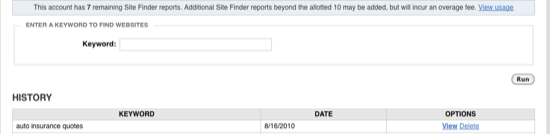
Here are the results returned for my query on auto insurance quotes:
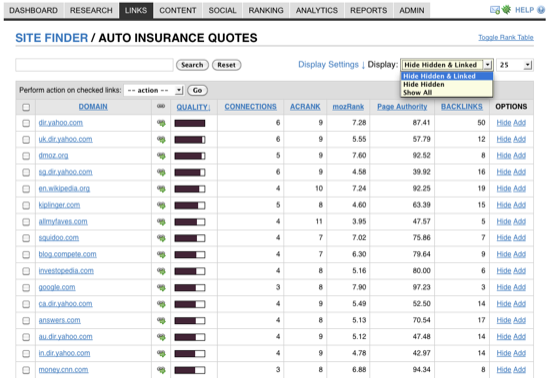
Site Finder gives you quite a bit of data and options in an easy to use interface, here's how it breaks down:
  • Search Box - search for a specific domain or reset the results post-search
  • Display Settings - show anywhere from 25 - 1k results on the page, show links that are "hidden" (links you "hid" via the options column), or show all links with no filters
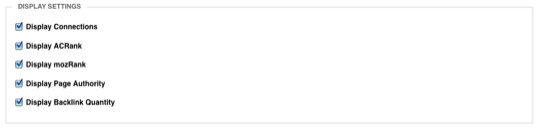
  • Display Settings Option Box - click "Display Settings' and you'll get a box where you can toggle ACRank, MozRank, Page Authority, and/or Connections off and on
  • Domain- the name of a domain which is linking to at least 1 site in the top ten Google Results. Click on the domain link to get a slick drop down of the sites that domain is linking too
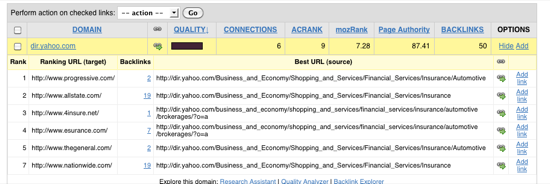
  • Link Icon - click the icon to display the domain in a new
  • Connections - number of sites in the top 10 for your keyword that have a link from that domain
  • ACRank - a quick, simple data point which aims to show how important a specific page is (0-15, 15 is the highest) based on referring domains. A more in-depth definition can be found here
  • MozRank - SeoMoz's global link popularity score. It mirrors PageRank but SeoMoz says it updates it more frequently and is more precise (scaled 0-10, 10 being the highest). A more in-depth overview can be found here
  • Page Authority - a predictor of how likely a page is to rank based on a 100 point, logarithmic scale independent of the page's content. The higher the better :)
  • Backlinks - total number of links the domain has going into the top 10 Google results
  • Options Tab - if you want to hide a domain from the report (maybe not a link you want to go after, you or your team members can click "hide" and the link will be hidden from the report. If "add" is clicked then the link is added to the link queue in the Link Manager (more on this shortly)
  • Export Options - export your report to PDF or CSV (really helpful, especially when running reports on hidden links to gauge how well a link builder might be doing in terms of assessing the appropriate links to hide
So that's Site Finder. The flexibility, power, speed, and collaborative features of Site Finder make it one of my favorite tools to use.

Backlink Explorer

Researching competitor's link profiles is usually a time-consuming piece of the SEO puzzle. While it still involves time, especially on larger link profiles, Backlink Explorer delivers some pretty impressive results quickly and efficiently via a 3rd party tie-in to Majestic SEO.
Another nice thing with Raven is a consistent, clean user interface across the toolset. Here's the spot where you enter the domain you want to research:

Just like Site Finder it will save the report in the history of whatever website profile you are saving the report in. You can explore it at anytime or delete it at anytime:

Continuing on with the auto insurance theme, I ran a quick report on GEICO:
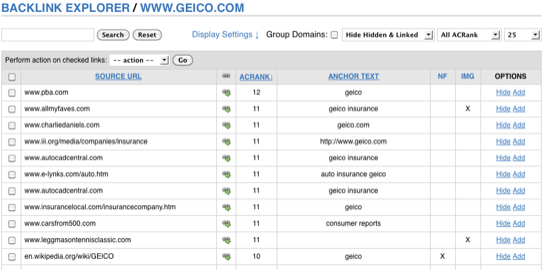
Backlink Explorer gives you the following data points and options:
  • Search Box - search for a particular domain or words within a domain
  • Display Settings - group domains (this is really helpful for cutting down duplicate results from domains with more than one link to the site), show/hide hidden or already linked from domains, filter by ACRank, and display up to 1,000 results on the page
  • Display Settings Box - display or hide no-follow, image, or date data fields
  • Source URL - the site the link is from
  • Link Icon - open page in a new window
  • ACRank - as discussed in Site Finder's review, more info here
  • Anchor Text - the anchor text of the link
  • No-follow - whether it's no-follow or not
  • Image - whether it's an image link or not
  • Options Box - hide the domain or add it to your link queue
  • Export - export results, filtered or non-filtered to CSV
What's really great about this tool is that you can do some pretty heavy filtering to get rid of the noisy links and quickly add the good ones to your link queue. On its face it may seem like it's not that big of a time-saver, but it really is if you are combing through a large profile or multiple link profiles.
You could really buzz through some fairly thick link profiles with the filtering options and put them right into your link queue for you to work on later or for a team member to work on. Once you start working with it you'll quickly see how efficient it is for you or for you and your staff.

Link Management

This is probably my favorite tool in the toolset. Prior to utilizing this tool, I was using lots and lots of spreadsheets to track link building campaigns which got to be pretty time consuming and tough to collaborate on.
It's built in to the Raven SEO Toolbar which allows you to quickly add a link to your link queue, right from your browser, rather than hand copying the website's data to a spreadsheet for further processing. This is a slick feature for a one person show and really sings when used in a collaborative link building environment. The last 2 spots are where your site would be listed and your account profile name:

When you are researching link partners, simply click that Add Link button and you are presented with this screen:
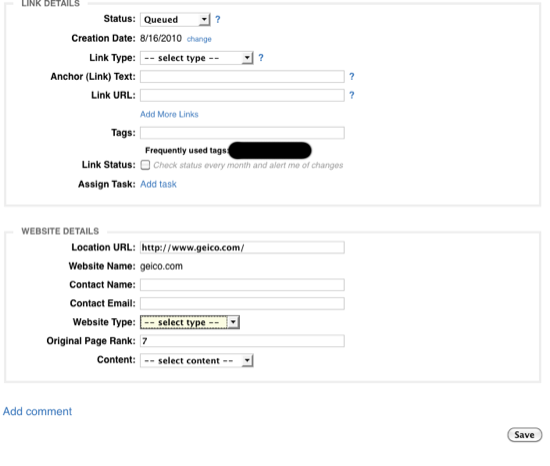
The link manager in an of itself is worth the price of admission in my opinion. So here you can:
  • Set the status to queued, requested, active, inactive, ignore, or declined. Most of the time it will be "queued" if you are saving it for further handling
  • Input the date the record was created
  • Select the type of link (organic, paid, blog, exchange, and so on). You can even define custom types in Raven and it will show as an option in this application
  • Note the desired anchor text of the link (great for collaboration with link building staff members)
  • Include the URL of where you'd like the link to point to
  • Add more links if you might be getting more than one link from the page
  • Tag the link for sorting within the link manager application
  • Set it to be monitored automatically from within Raven
  • Add it as a task for you or a staff member
  • Raven pulls in the URL, domain name of the site, and PageRank of the page
  • If available you can list the contact name and email as well as the type of site it is and even leave a note attached to the record
Try doing all that in a spreadsheet and a bunch of word or text documents for notes :)
Once again, another solid way to save loads of time doing what is probably the most time consuming part of an SEO campaign, link building.
So that was just the toolbar portion of the Link Manager. Within your Raven account you have access to the same "add link" application that you do from the toolbar. Perhaps you have link opportunities that you or a staff member cultivated outside of Raven. You can use this form to plug them right in.
You can also import links into your Raven account.
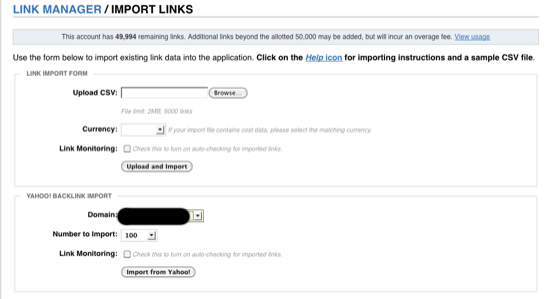
You can upload a CSV file with custom data that Raven will recognize up to 20 columns of data points. These data points relate to Raven's Link Manager application. So you're able to define all of these (Raven gives you a handy sample CSV to do this from):
  1. Status
  2. Link Type
  3. Link Text
  4. Link URL
  5. Website Name
  6. Website URL
  7. Website Type
  8. PR
  9. Contact Name
  10. Contact Email
  11. Contact ID
  12. Cost Type
  13. Cost
  14. Payment Method
  15. Payment Reference
  16. Start Date
  17. End Date
  18. Creation Date
  19. Comment
  20. Owner Name
Currently the currencies supported are USD, GBP, EUR, AUD.
When you upload you can automatically add link monitoring by clicking the link monitoring box.
You can also import up to 1,000 backlinks from Yahoo! via your domain or your competitor's domains (ones you've defined in Raven).
Raven's link monitoring service will alert you if any changes occur to a link or a page the link is on. For example, you would be notified if:
  • PageRank changes
  • Anchor text changes
  • Another link gets added to the page
  • They add no-follow to your link
  • The location of your link changes
I believe Raven now has about 21 different tools within their toolset now. This one tool, for me, is well worth the subscription cost. It really does save quite a bit of time and there's really nothing else like it on the market that I've seen (in terms of functionality, collaboration, and ease of use).

Facebook

There are a growing number of applications out there where you can manage your social media accounts (mainly Twitter and Facebook, but Facebook in this example). If you want the most bang for your buck, Raven offers a state of the art Facebook application within its toolset.
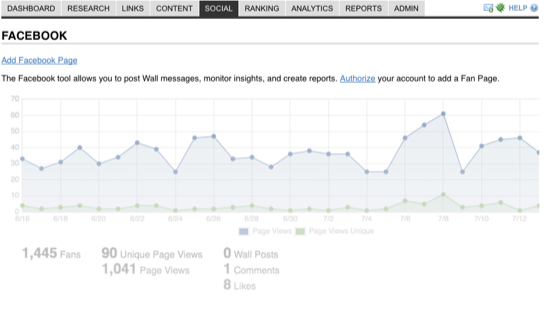
In addition to the deep reporting Raven gives you from within Facebook you can now integrate with Google Analytics from within Raven.
Here are some of the features offered within Raven's Facebook Tool:
  • Deep Google Analytics integration
  • White label reporting of Facebook metrics
  • Automatic wall post scheduling
  • Fan tracking, customizable by date range
  • Monitor posts, comments, and likes
What I really like about the Facebook tool in Raven is that you can really synch up your analytics information and truly get a handle on what's working and not working over defined periods of time.
The reason why I'm a big fan of the integration here is due to the fact that you are likely going to be using either Twitter or Facebook (or both) in your internet marketing campaign(s). So to have this data in one place and integrated, as well as using the deep metrics that the tools provide, amount to a set of game changing features with respect to Facebook campaign management.
Sometimes with all in one toolsets you see features like this get added and they are kind of watered down. This is not the case here, it's one of the stronger Facebook management tools out there. If you are going to allocate resources to search and social then you need a way to accurately track the ROI of your campaigns and that's exactly what you get with this tool.

Twitter

Occasionally Social Media campaigns can be tough to quantify in terms of ROI and overall effectiveness. Much like the Facebook Monitor, Raven offers a tool for Twitter users which is a real gem.
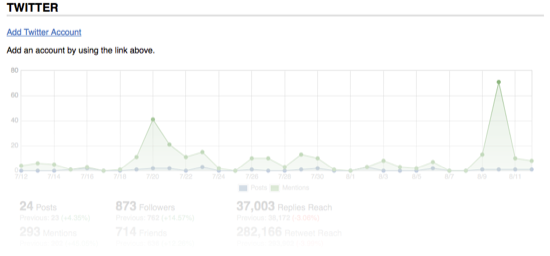
Raven's Twitter Tool

One feature within the Twitter tool is the ability to post a new tweet right away or schedule it for later, integrate with 3 URL shortener services (bit.lyis.gdj.mp, and tinyurl), and set custom Google Analytics campaign variables. Raven also gives you the ability to work with bit.ly and j.mp's APIs.
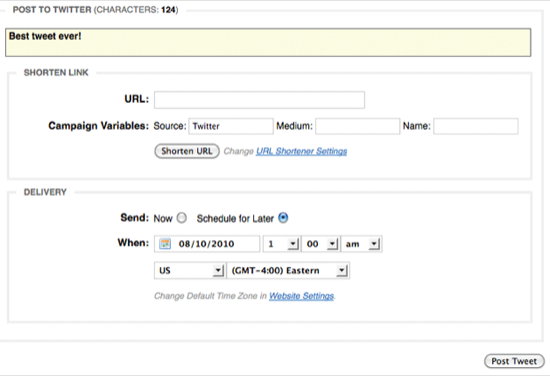
Monitor Twitter Activity and Engagement

If you are allocating resources to Twitter, or being paid by a company to run their Twitter account, then you'll want the ability to see some pretty juicy stats related to your Twitter campaign. With Raven's new Twitter tool you'll be able to see the following:
  • Posts
  • Followers
  • Friends
  • Friend to Follower Ratio
  • Mentions
  • Google Analytics referral data
  • Reply and Retweet reach (a great way to see how many readers are seeing the message
Here's a screenshot of the statistical overlay:
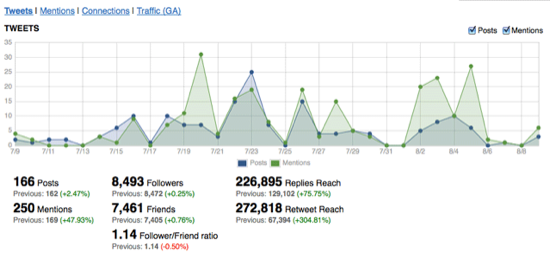
What's really nice about this is the date range comparisons. It's a huge time-saver to manage this data mostly in one place, you can truly get a handle on what's working and what's not working, as well as why it's not working or working. The level of detail and integration is really unique to Raven's suite of tools.

Monitor Tweets Related to Your Account

In addition to viewing tweets from your public timeline you can also see all mentions associated with your account, as well as tweets posted from your account:
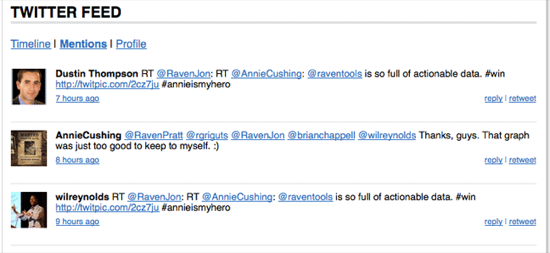
A great feature here is that if there is a thread associated with a tweet you can click on the "view thread" link and see the entire thread from within the Twitter tool.
You can also access this via Raven's slick iPhone/iPad app

Campaign Reporting

Much like the link tools are worth the full subscription for me, if you have a need for custom reporting then Raven's Campaign Reporting features are probably worth the price of admission for you.
In lockstep with their other tools, the Campaign Reporting feature set is super easy to use:
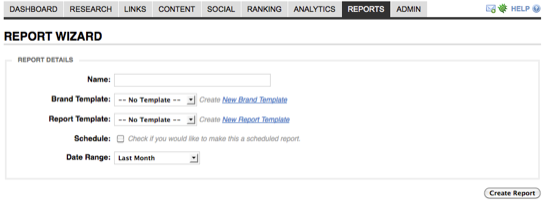
You can quickly create white-labeled, customized reports for the following modules within Raven:
  • Link Building
  • Twitter
  • Rankings
  • Facebook
  • Keyword Research
  • Competitor Research
  • Social Media Monitoring (track mentions of your brand and/or keywords related to your service. It also allows you to manage overall sentiment and track daily buzz)
  • Google Analytics
The reporting options include the ability for you to use customized descriptions to explain different parts of the report, summary pages for different sections, and Raven will even generate a table of contents for you.

Brand Templates

Here you can quickly create a completely customized brand template for use with your reports, just click New Brand Template in the campaign home screen.
Give the template a name:

Assign it to a website, a profile or an account:

Pick a custom logo or text header:
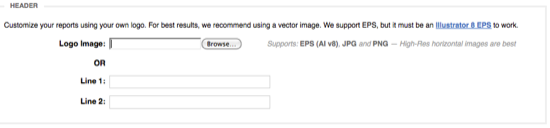
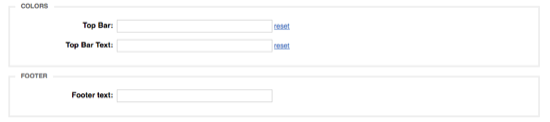
Customize the colors and the footer text
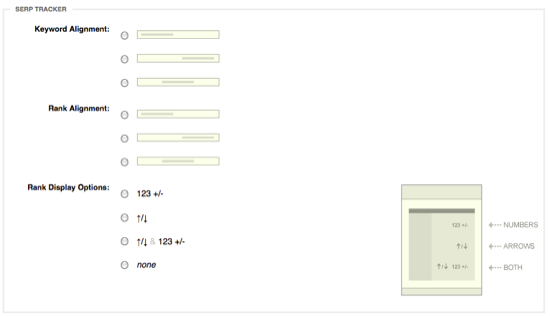
Customize the appearance of your ranking results (keyword and rank alignment, numbers/+/-/arrows)
Report Templates

Report Templates allow you to configure specific aspects of each report, saving you from having to create them over and over again for each client or each report:
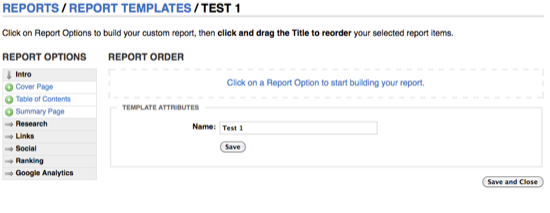
Similar to a Brand Template you start by clicking "New Report Template" in the Campaign Report screen. What I like about these reports is that they are fully customizable. Maybe you have clients that just hire you for keyword research, or just links, or both of those and social media (and so on). Well with the customization flexibility of these reports you can set up a custom template for just about any reporting need you may come across.
So name your report (I did Test 1) and you'll see the creation options on the left side:
To give you an idea of how deep your customization and reporting options are, here is that left bar fully extended:
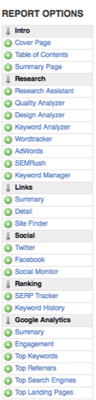
Every singe one of those tabs is a customizable report :) So you just click on the ones you want to add and they are added to the report template.

Customizing Reporting Fields

When you add the fields to a template, or when you are creating the report, you can expand the section and customize each one (the summary page and title are report-wide options, but they each have other options depending on the piece you are reporting on). Here's the customization options you get with the link detail module:
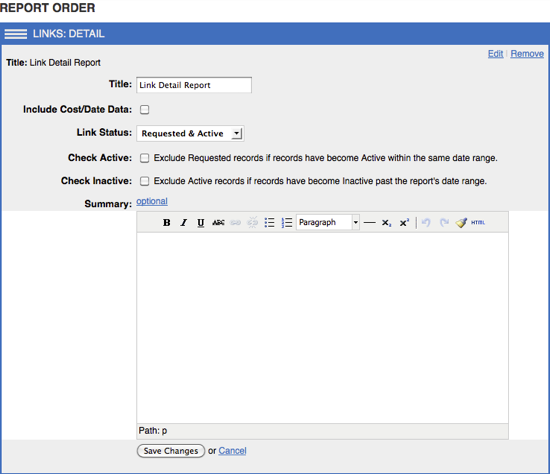
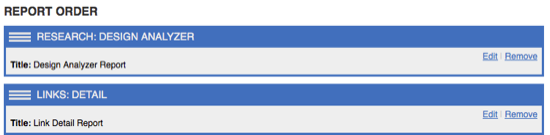
Once you add more than one, you can collapse them and reorder them in a drag and drop fashion:
Scheduling and Auto Delivery

Maybe you want to auto-deliver reports to employees for further customization or presentation work, or maybe you want to set and forget the delivery of reports to your clients. You can send reports as attached PDF's or as trackable download links.
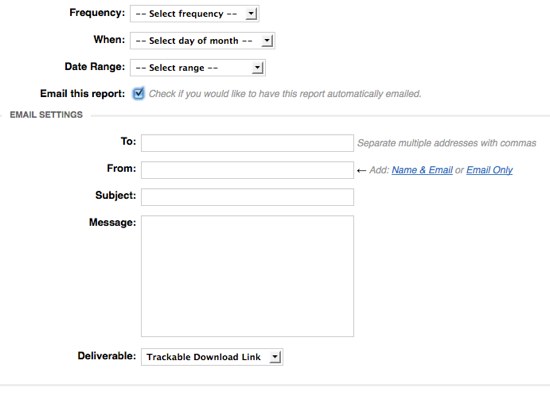
You can do monthly, daily, weekly, or quarterly reports and select a day between 1-28 as well as define a custom date range.

Create the Report

It's really easy to create a detailed, customized report within Raven. Name your report, select your brand and report templates, set you scheduling and delivery options, and create! It is really that simple. As mentioned in the Report Template section you can add, customize, and arrange all those reporting areas to suit your reporting needs.

Additional Features

While I focused on key areas that sold me on Raven, I also utilize their other tools. In addition to the tools mentioned above Raven's tools also include

Give Raven a Try

Raven's integration is slick and powerful:
  • Google, SEM Rush, and Wordtracker for keyword research
  • Majestic SEO & SeoMoz for link building and research
  • Google Analytics integration
  • Twitter & Facebook integration with lots of engagement goodies
Raven currently offers a free 30 trial, no credit card required, on all their plans. The combination of SEO tools, link building tools, social media integration, and custom reporting options were strong selling points for me especially at the price points Raven offers. I think you can also see the significant time saving benefits Raven provides, especially in the reporting module.
There isn't much to lose, a free 30 day trial that doesn't require you to enter any payment information. So give Raven's SEO Tools a try.
Pricing and Free Trial Info
Subscribe to our blog via email or RSS to get more great posts like this one!
Original Page: http://www.seobook.com/raven-seo-tools-review

Alexa Site Audit Review


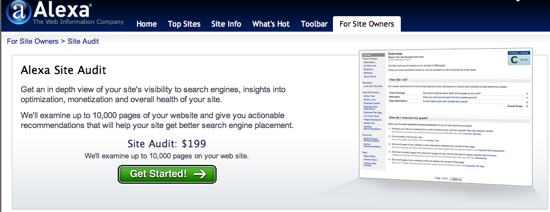
Alexa, a free and well-known website information tool, recently released a paid service.
For $199 per site Alexa will audit your site (up to 10,000 pages) and return a variety of different on-page reports relating to your SEO efforts.
It has a few off-page data points but it focuses mostly on your on-page optimization.
You can access Alexa's Site Audit Report here:
http://www.alexa.com/siteaudit

Report Sections

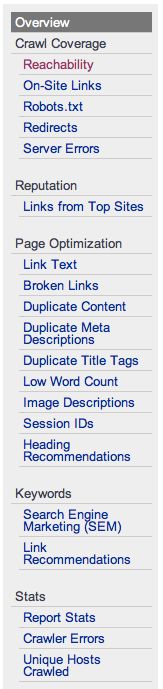
Alexa's Site Audit Report breaks the information down into 6 different sections (some which have additional sub-sections as well)
  • Overview
  • Crawl Coverage
  • Reputation
  • Page Optimization
  • Keywords
  • Stats
The sections break down as follows:
So we ran Seobook.com through the tool to test it out :)
Generally these reports take about a day or two, ours had some type of processing error so it took about a week.

Overview

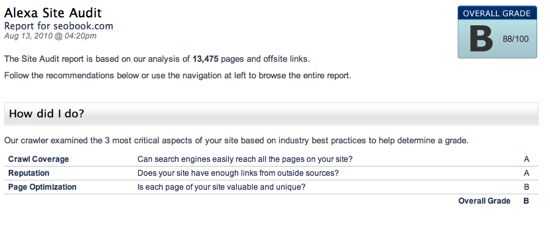
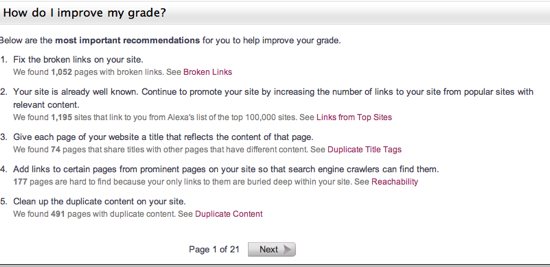
The first section you'll see is the number of pages crawled, followed by 3 "critical" aspects of the site (Crawl Coverage, Reputation, and Page Optimization). All three have their own report sections as well. Looks like we got an 88. Excuse me, but shouldn't that be a B+? :)
So it looks like we did just fine on Crawl Coverage and Reputation, but have some work to do with Page Optimization.
The next section on the overview page is 5 recommendations on how to improve your site, with links to those specific report sections as well. At the bottom you can scroll to the next page or use the side navigation. We'll investigate these report sections individually but I think the overview page is helpful in getting a high-level overview of what's going on with the site.
Crawl Coverage

This measures the "crawl-ability" of the site, internal links, your robots.txt file, as well as any redirects or server errors.

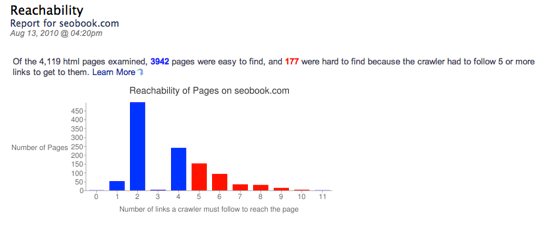
Reachability

The Reachability report shows you a break down of what HTML pages were easy to reach versus which ones were not so easy to each. Essentially for our site, the break down is:
  • Easy to find - 4 or less links a crawler must follow to get to a page
  • Hard to find - more than 4 links a crawler must follow to get to a page
The calculation is based on the following method used by Alexa in determining the path length specific to your site:
Our calculation of the optimal path length is based on the total number of pages on your site and a consideration of the number of clicks required to reach each page. Because optimally available sites tend to have a fan-out factor of at least ten unique links per page, our calculation is based on that model. When your site falls short of that minimum fan-out factor, crawlers will be less likely to index all of the pages on your site.
A neat feature in this report is the ability to download your URL's + the number of links the crawler had to follow to find the page in a .CSV format.
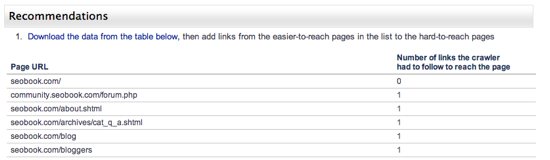
This is a useful feature for mid-large scale sites. You can get a decent handle on some internal linking issues you may have which could be affecting how relevant a search engine feels a particular page might be. Also, this report can spot some weaknesses in your site's linking architecture from a usability standpoint.
On-Site Links

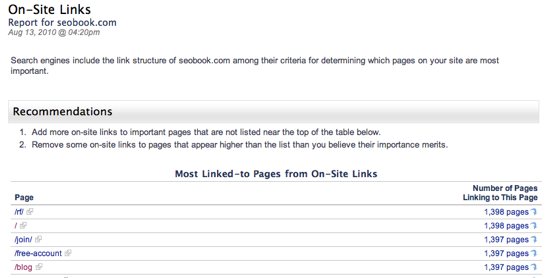
While getting external links from unique domains is typically a stronger component to ranking a site it is important to have a strong internal linking plan as well. Internal links are important in a few ways:
  • The only links where you can 100% control the anchor text (outside of your own sites of course, or sites owned by your friends)
  • They can help you flow link equity to pages on your site that need an extra bit of juice to rank
  • Users will appreciate a logical, clear internal navigation structure and you can use internal linking to get them to where you want them to go
Alexa will show you your top linked to (from internal links) pages:
You can also click the link to the right to expand and see the top ten pages that link to that page:
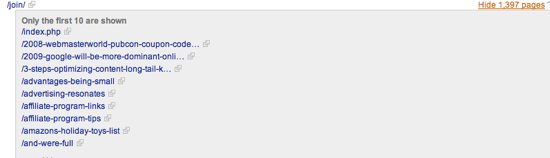
So if you are having problems trying to rank some sub-pages for core keywords or long-tail keywords, you can check the internal link counts (and see the top 10 linked from pages) and see if something is amiss with respect to your internal linking structure for a particular page.
Robots.txt

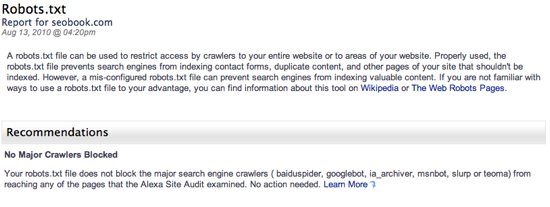
Here you'll see if you've restricted access to these search engine crawlers:
  • ia_archiver (Alexa)
  • googlebot (Google)
  • teoma (Ask)
  • msnbot (Bing
  • slurp (Yahoo)
  • baiduspider (Baidu)
If you block out registration areas or other areas that are normally restricted, then the report will say that you are not blocking major crawlers but will show you the URL's you are blocking under that part of the report.

There is not much that is groundbreaking with Robots.Txt checks but it's another part of a site that you should check when doing an SEO review so it is a helpful piece of information.

Redirects

We all know what happens when redirects go bad on a mid-large sized site :)
This report will show you what percentage of your crawled pages are being redirected to other pages with temporary redirects.
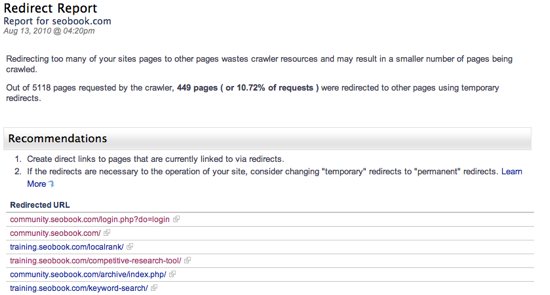
The thing with temporary redirects, like 302's, is that unlike 301's they do not pass any link juice so you should pay attention to this part of the report and see if any key pages are being redirected improperly.

Server Errors

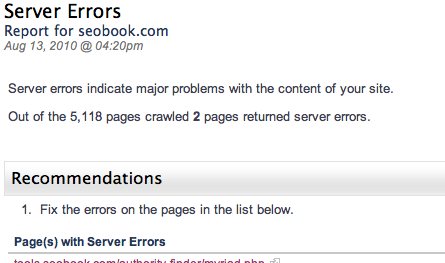
This section of the report will show you any pages which have server errors.
Making sure your server is handling errors correctly (such as a 404) is certainly worthy of your attention.
Reputation

The only part of this module is external links from authoritative sites and where your site ranks in conjunction with "similar sites" with respect to the number of sites linking to your sites and similar sites.

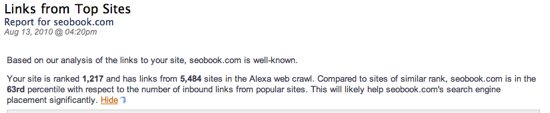
Links from Top Sites

The analysis is given based on the aforementioned forumla:
Then you are shown a chart which correlates to your site and related sites (according to Alexa) plus the total links pointing at each site which places the sites in a specific percentile based on links and Alexa Rank.
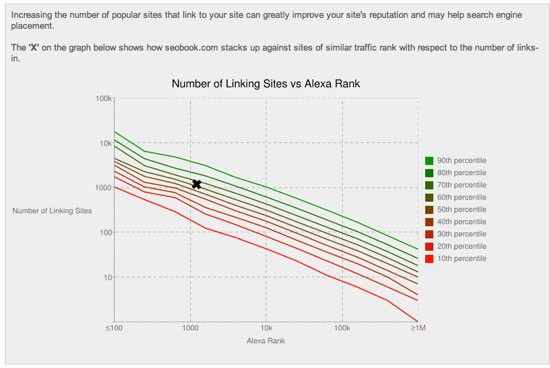
Since Alexa is heavily biased towards webmaster type sites based on their user base, these Alexa Rank's are probably higher than they should be but it's all relative since all sites are being judged on this measure.
The Related Sites area is located below the chart:
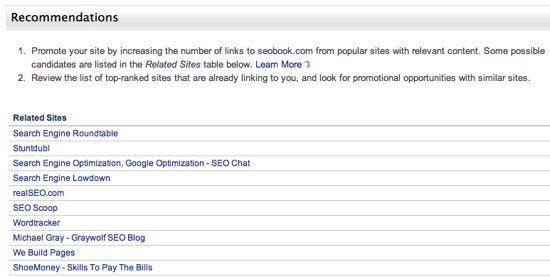
Followed by the Top Ranked sites linking to your site:
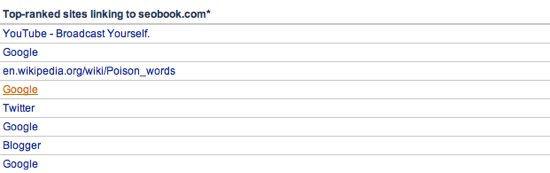
I do not find this incredibly useful as a standalone measure of reputation. As mentioned, Alexa Rank can be off and I'd rather know where competing sites (and my site or sites) are ranking in terms of co-occurring keywords, unique domains linking, strength of the overall link profile, and so on as a measure of true relevance.
It is, however, another data point you can use in conjunction with other tools and methods to get a broader idea of your site and related sites compare.

Page Optimization

Checking the on-page aspects of a mid-large sized site can be pretty time consuming. Our Website Health Check Tool covers some of the major components (like duplicate/missing title tags, duplicate/missing meta descriptions, canonical issues, error handling responses, and multiple index page issues) but this module does some other things too.

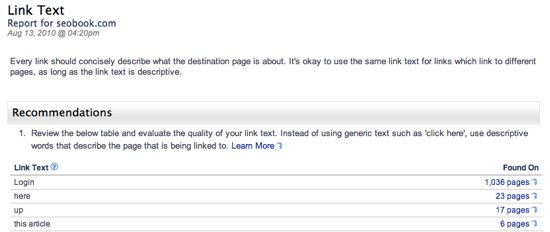
Link Text

The Link Text report shows a break down of your internal anchor text:
Click on the pages link and see the top pages using that anchor text to link to a page (shows the page the text is on as well as the page it links too):

The report is based on the pages it crawled so if you have a very large site or lots and lots of blog posts you might find this report lacking a bit in terms of breadth of coverage on your internal anchor text counts.
Broken Links

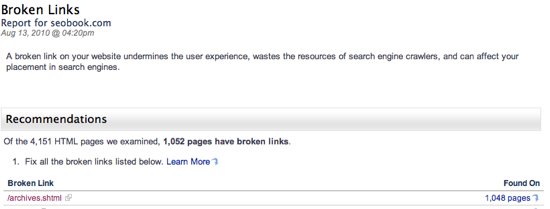
Checks broken links (internal and external) and groups them by page, which is an expandable option similar to the other reports:
Xenu is more comprehensive as a standalone tool for this kind of report (and for some of their other link reports as well).

Duplicate Content

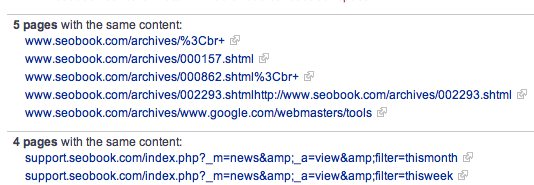
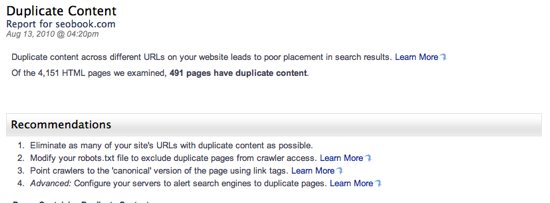
The Duplicate Content report groups all the pages that have the same content together and gives you some recommendations on things you can do to help with duplicate content like:
  • Working with robots.txt
  • How to use canonical tags
  • Using HTTP headers to thwart duplicate content issues
Here is how they group items together:
Anything that can give you some decent insight into potential duplicate content issues (especially if you use a CMS) is a useful tool.
Duplicate Meta Descriptions

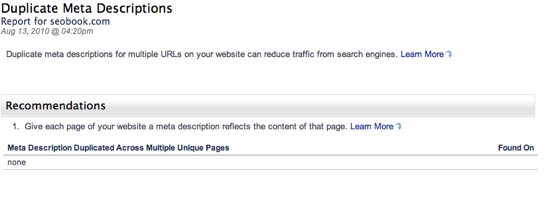
No duplicate meta descriptions here!
Fairly self-explanatory and while a meta description isn't incredibly powerful as standalone metric it does pay to make sure you have unique ones for your pages as every little bit helps!
Duplicate Title Tags

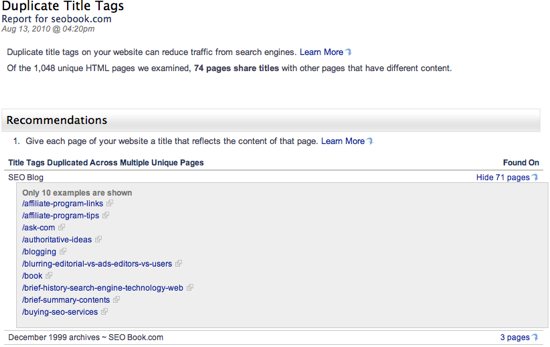
You'll want to make sure you are using your title tags properly and not attacking the same keyword or keywords in multiple title tags on separate pages. Much like the other reports here, Alexa will group the duplicates together:

Low Word Count

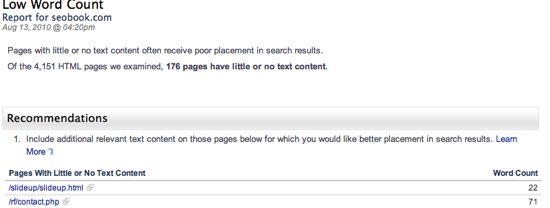
Having a good amount of text on a page is good way to work in your core keywords as well as to help in ranking for longer tail keywords (which tend to drive lots of traffic to most sites). This report kicks out pages which have (in looking at the stats) less than 150 words or so on the page:
There's no real magic bullet for the amount of words you "should" have on a page. You want to have the right balance of word counts, images, and overall presentation components to make your site:
  • Linkable
  • Textually relevant for your core and related keywords
  • Readable for humans

Image Descriptions

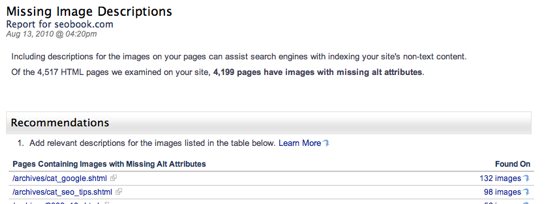
Continuing on with the "every little bit helps" mantra, you can see pages that have images with missing ALT attributes:
Alexa groups the images on per page, so just click the link to the right to expand the list:

Like meta descriptions, this is not a mega-important item as a standalone metric but it helps a bit and helps with image search.
Session IDs

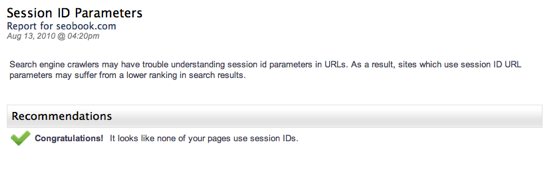
This report will show you any issues your site is having due to the use of session id's.
If you have issues with session id's and/or other URL parameters here you should take a look at using canonical tags or Google'sparameter handling (mostly to increase the efficiency of your site's crawl by Googlebot, as Google will typically skip the crawling of pages based on your parameter list)
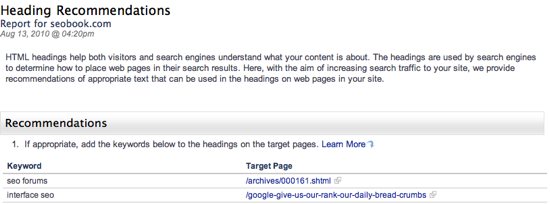
Heading Recommendations

Usually I cringe when I see automated SEO solutions. The headings section contains "recommended" headings for your pages. You can download the entire list in CSV format:
The second one listed, "interface seo", is on a page which talks about Google adding breadcrumbs to the search results. I do not think that is a good heading tag for this blog post. I suspect most of the automated tags are going to be average to less than average.
Keywords

Alexa's Keyword module offers recommended keywords to pursue as well as on site recommendations in the following sub-categories:
  • Search Engine Marketing (keywords)
  • Link Recommendations (on-site link recommendations

Search Engine Marketing

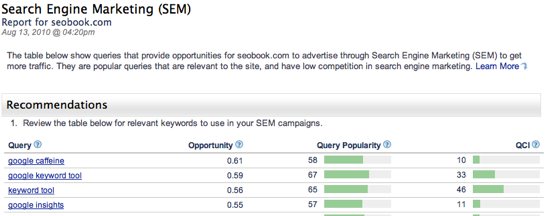
Based on your site's content Alexa offers up some keyword recommendations:
The metrics are defined as:
  • Query - the proposed keyword
  • Opportunity - (scales up to 1.0) based on expected search traffic to your site from keywords which have a low CPC. A higher value here typically means a higher query popularity and a low QCI. Essentially, the higher the number the better the relationship is between search volume, low CPC, and low ad competition.
  • Query Popularity (scales up to 100) based on the frequency of searches for that keyword
  • QCI - (scales up to 100) based on how many ads are showing across major search engines for the keyword
For me, it's another keyword source. The custom metrics are ok to look at but what disappoints me about this report is that they do not align the keywords to relevant pages. It would be nice to see "XYZ keywords might be good plays for page ABC based on ABC's content".

Link Recommendations

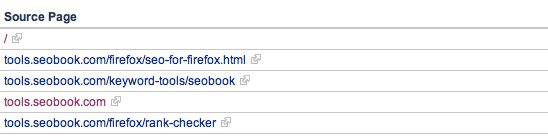
This is kind of an interesting report. You've got 3 sets of data here. The first is the "source page" and this is a listing of pages that, according to Alexa's crawl, are pages that appear to be important to search engines as well as pages that are easily crawled by crawlers:
These are pages Alexa feels should be pages you link from. The next 2 data sets are in the same table. They are "target pages" and keywords:
Some of the pages are similar but the attempt is to match up pages and predict the anchor text that should be used from the source page to the target page. It's a good idea but there's a bit of page overlap which detracts from the overall usefulness of the report IMO.

Stats

The Stats section offers 3 different reports:
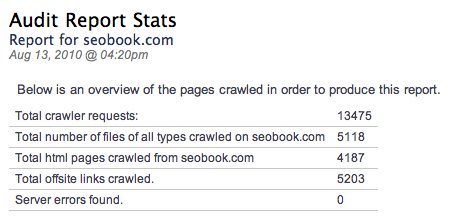
  • Report Stats - an overview of crawled pages
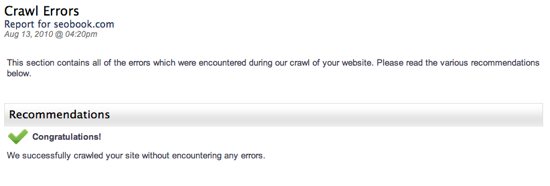
  • Crawler Errors - errors Alexa encountered in crawling your site
  • Unique Hosts Crawled - number of unique hosts (your domain and internal/external domains and sub-domains) Alexa encountered in crawling your site

Report Stats

An overview of crawl statistics:

Crawler Errors

This is where Alexa would show what errors, if any, they encountered when crawling the site

Unique Hosts Crawled

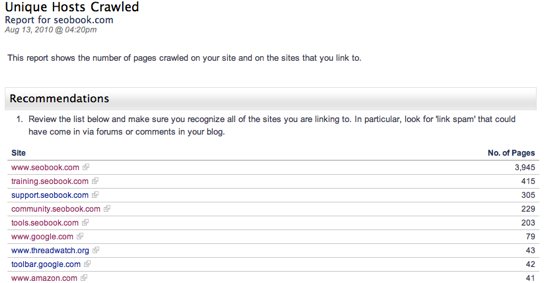
A report showing which sites you are linking to (as well as your own domain/subdomains)

Is it Worth $199?

Some of the report functionality is handled by free (in some cases) tools that are available to you. Xenu does a lot of what Alexa's link modules do and if you are a member here the Website Health Check Tool does some of the on-page stuff as well.
I would also like to see more export functionality especially in lieu of white label reporting. The crawling features are kind of interesting and the price point is fairly affordable as one time fee.
The Alexa Site Audit Report does offer some benefit IMO and the price point isn't overly cost-prohibitive but I wasn't really wowed by the report. If you are ok with spending $199 to get a broad overview of things then I think it's an ok investment. For larger sites sometimes finding (and fixing) only 1 or 2 major issues can be worth thousands in additional traffic.
It left me wanting a bit more though, so I might prefer to spend that $199 on links since most of the tool's functionality is available to me without dropping down the fee. Further, the new SEOmoz app also covers a lot of these features & is available at a monthly $99 price-point, while allowing you to run reports on up to 5 sites at a time. The other big thing for improving the value of the Alexa application would be if they allowed you to run a before and after report as part of their package. That way in-house SEOs can not only show their boss what was wrong, but can also use that same 3rd party tool as verification that it has been fixed.
Subscribe to our blog via email or RSS to get more great posts like this one!
Original Page: http://www.seobook.com/alexa-site-audit-review

Share

Twitter Delicious Facebook Digg Stumbleupon Favorites More